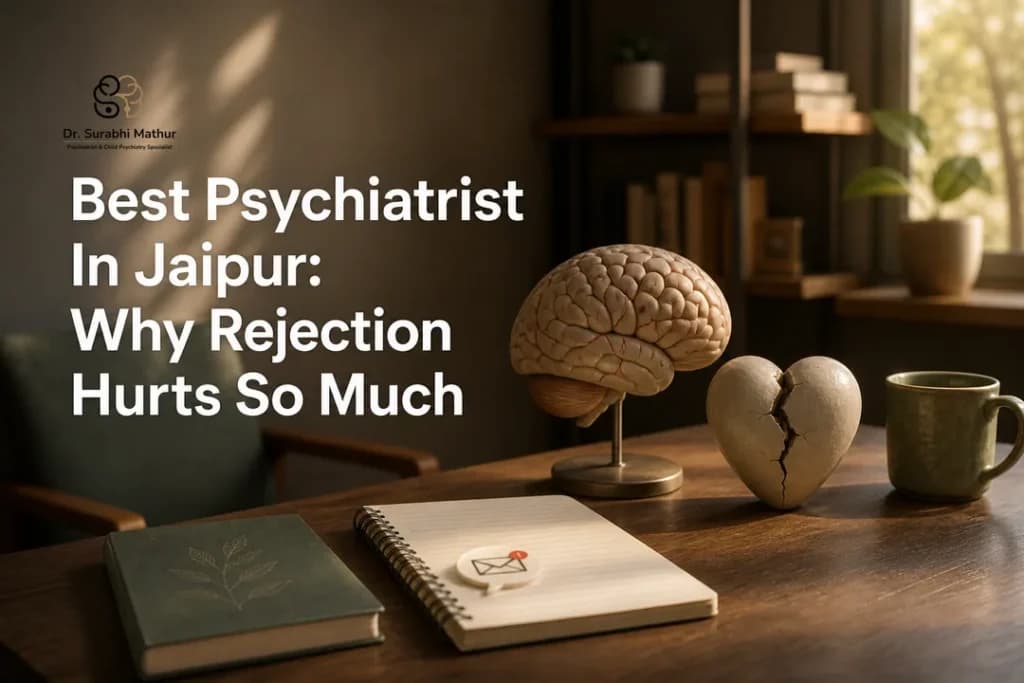
Why Does Rejection Hurt So Much? Understanding the Brain’s Response to Social Rejection is a question I hear often in clinic, and many people ask it while searching for the best psychiatrist in jaipur after a breakup, being left on read, or feeling excluded at work. Importantly, this pain is not “overreacting.” Instead, your brain treats social connection like safety. In this article, you will learn what happens in the brain during rejection, why it can trigger anxiety or depression, and what actually helps you recover.
Why Social Rejection Can Feel Like Physical Pain
First, humans are wired for belonging. For most of our history, being pushed out of a group could threaten survival. Because of that, your brain learned to treat exclusion as danger.
In fact, brain-imaging research suggests that social pain overlaps with physical pain pathways. A widely cited study found that the dorsal anterior cingulate cortex and anterior insula, regions involved in distress, activate during social exclusion. You can read the overview in the American Psychological Association’s explanation of why rejection hurts. This overlap helps explain why rejection can feel like a punch in the chest.
However, not everyone experiences the same intensity. Your past experiences, current stress load, sleep, and self-esteem all shape how strongly the brain sounds the alarm.
What The Brain Is Actually Protecting
Usually, the brain does not “want to torture you.” Instead, it tries to protect your social bonds. Therefore, it pushes you to repair the connection, regain status, or avoid future rejection.
That protective response can look messy. For example, some people over-apologize, chase reassurance, or replay every message. Others shut down and withdraw. Both patterns come from the same threat signal.
Why Your Body Reacts So Fast
Next, rejection can trigger the stress response system within seconds. Your heart rate rises, your stomach tightens, and your mind scans for clues. As a result, you may feel restless, shaky, or nauseated.
Importantly, stress hormones can also disturb sleep and appetite. Consequently, a short social event can spiral into a few rough days if you cannot recover with rest and support.
Best Psychiatrist In Jaipur: When Rejection Hits Mental Health
Rejection hurts for most people. Still, sometimes it becomes more than a temporary wound. In our work with patients across Jaipur, we repeatedly see a pattern. A “small” rejection often reactivates an older story, such as childhood criticism, bullying, or an invalidating relationship. Then the current event feels bigger than it looks from the outside.
Because of that layering effect, rejection can worsen or unmask mental health concerns. Notably, it can intensify anxiety, depressive symptoms, obsessive thinking, and even panic.
Common Emotional And Cognitive Aftershocks
First, many people develop harsh self-talk. They interpret one event as proof of personal defect. That thinking style increases emotional pain and reduces problem-solving.
Second, you may fall into rumination. Rumination means repetitive, circular thinking that feels productive but rarely leads to action. Over time, it increases the risk of depression.
Third, some people swing to anger or numbness. On the other hand, some become highly sensitive to any hint of disapproval. Both responses can strain relationships further.
Rejection Sensitivity Vs. Trauma Triggers
Rejection sensitivity means you expect rejection and notice it quickly. It can develop after repeated criticism or unstable attachment. In contrast, trauma triggers often come with body-based reactions, flashbacks, or a strong sense of threat.
Still, the lines can blur. Therefore, a careful psychiatric consultation in Jaipur can help you understand what you are experiencing and why it repeats.
When Rejection Leads To Symptoms That Need Help
Not every painful phase requires treatment. However, certain signs suggest you may benefit from professional support. Consider reaching out if you notice these patterns for two weeks or more, or if they feel severe:
- Sleep problems such as difficulty falling asleep, frequent waking, or early morning waking.
- Loss of interest in work, hobbies, or social contact.
- Intense anxiety, panic-like symptoms, or constant dread about being judged.
- Obsessive checking of messages or repeated reassurance-seeking that you cannot control.
- Thoughts of self-harm or feeling like you cannot cope.
For trustworthy guidance on warning signs and when to seek care, review the National Institute of Mental Health overview on depression and NIMH guidance on anxiety disorders. These resources also explain treatment approaches in plain language.
How CBT And Psychotherapy Rewire The Rejection Loop
Fortunately, the brain can learn new responses. In Jaipur, many people look for psychotherapy and cognitive behavioral therapy (CBT) because rejection pain often runs on automatic thoughts. CBT helps you catch those thoughts, test them, and replace them with balanced alternatives.
In practice, CBT focuses on links between situations, thoughts, emotions, and behavior. Therefore, you gain tools you can use in real time, not just insight.
Skills That Reduce The Pain Without Numbing You
First, we work on identifying the “headline thought.” It is the strongest meaning your brain assigns to the event. For example: “I am not lovable” or “I will always be left.” Once you name it, you can challenge it.
Next, we build emotional regulation skills. For instance, paced breathing, grounding, and short behavioral activation tasks help the nervous system settle. As a result, your mind stops acting like the rejection is an emergency.
Finally, we practice interpersonal effectiveness. That can include boundary setting, assertive communication, and learning to tolerate ambiguity. Importantly, you do not need to chase closure to heal.
Best Psychiatrist In Jaipur: Treatment Options That Support Recovery
Sometimes skills alone are not enough, especially when rejection triggers clinical depression, anxiety disorders, OCD, insomnia, or bipolar mood swings. In that case, treatment can combine psychotherapy with medication when appropriate. A psychiatrist in Jaipur can assess symptoms, duration, severity, medical history, and safety risks before suggesting a plan.
At a mental wellness clinic in Jaipur, a thoughtful plan often includes several layers. Moreover, it remains flexible as your symptoms change. Results vary from person to person, because biology, stressors, and support systems differ.
How A Psychiatric Consultation Can Help
First, an evaluation clarifies what is happening. For example, persistent rumination could be anxiety, depression, OCD, or an adjustment reaction. Each needs a different approach.
Second, it helps you set realistic goals. You may want the pain to disappear overnight, but recovery often means shorter episodes, fewer triggers, and better coping. Consequently, progress becomes measurable.
Third, if medication is considered, a psychiatrist can explain benefits and trade-offs. That includes side effects, timelines, and follow-up needs. Importantly, no ethical clinician can guarantee a specific outcome.
If you are exploring options, you can also learn more about Dr. Surabhi Mathur’s approach through her psychiatry and psychotherapy services in Jaipur and by visiting Dr. Surabhi Mathur’s mental health clinic details. These links help you understand how care is structured and what to expect.
Practical Steps To Bounce Back After Rejection
First, treat the first 24 to 72 hours like emotional first aid. That means you reduce triggers and restore basics. Sleep, food, hydration, and movement matter more than analysis at this stage.
Next, shift from “Why did this happen?” to “What do I need now?” That change reduces rumination. It also increases self-trust.
Try these steps as a simple reset plan:
- Name the emotion in one sentence. For example, “I feel hurt and embarrassed.”
- Limit replaying by scheduling a 10-minute worry window, then stop.
- Do one grounding action such as a short walk, cold water splash, or slow breathing.
- Reach out to one safe person for connection, not for “fixing.”
- Write a balanced statement: “This hurts, and I can handle it step by step.”
Meanwhile, watch your coping traps. For example, doom-scrolling, alcohol use, or impulsive texting can extend distress. Instead, choose actions that reduce shame later.
Finally, remember that rejection often carries incomplete information. Someone else’s distance may reflect their stress, limitations, or mismatch. Therefore, you do not need to turn it into a final verdict on your worth.
In short, rejection hurts because the brain processes social loss as threat and pain, not because you are weak. If the pain keeps returning, or if it starts affecting sleep, work, or relationships, getting support can change the pattern. Many people who search for the best psychiatrist in jaipur are not “too sensitive.” They are simply ready for tools, clarity, and care.
Consultation And Next Steps
If you want help with anxiety treatment in Jaipur, depression treatment in Jaipur, OCD treatment in Jaipur, insomnia treatment in Jaipur, or relationship counseling in Jaipur, a structured plan can make rejection feel manageable again. Dr. Surabhi Mathur combines evidence-based psychiatry with CBT, psychotherapy, and personalized medication management, depending on your needs and preferences.
Consult Dr. Surabhi Mathur today and take the first step toward healthier thoughts and emotional well-being.
Contact Information
 Phone: 83089 20744
 Hospital Address: Santokba Durlabhji Memorial Hospital
Clinic Address: VS MediHUB, Jaipur
This article is general information, not a diagnosis or treatment plan. Please consult a psychiatrist about your own situation. Read our medical disclaimer and editorial policy.