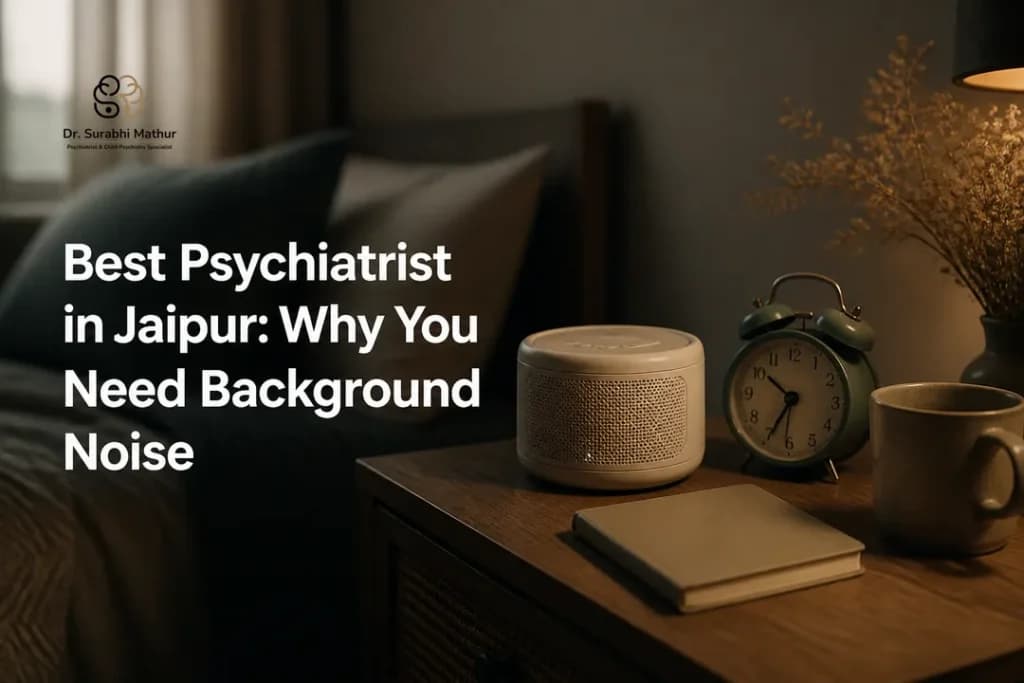
“Best Psychiatrist in Jaipur: Why You Need Background Noise” connects directly to the question many people ask themselves: “Why Do You Need Background Noise to Sleep, Study or Work? What Your Brain May Be Seeking.” If you often reach for a fan, rain sounds, or a podcast to function, you are not “weird.” Instead, your brain may be trying to regulate attention, emotion, and arousal in a very practical way. In this article, you will learn what background noise can do for the nervous system, when it helps, when it backfires, and when to consider professional support.
Why Your Brain Craves Background Noise at Night or Work
First, it helps to understand that the brain constantly filters sound. Even when you “ignore” noise, your auditory system keeps scanning for threat. Because of this, complete silence can feel too exposed for some people. As a result, the mind stays alert instead of settling.
In addition, steady sound can reduce the contrast between small disturbances and your awareness. For example, a door click feels sharper in silence. However, the same click feels less “important” over gentle, consistent noise. This is one reason people report easier sleep with a fan or AC hum.
Notably, background sound can also support focus. When a task feels demanding, the brain may seek a predictable sensory anchor. Therefore, a constant soundscape can make attention feel steadier for some people.
How Sound Masking Calms the Brain’s Alarm System
Sound masking means using a constant sound to make sudden noises less noticeable. In fact, many sleep researchers discuss “white noise” because it covers a wide range of frequencies. Consequently, your brain reacts less to sudden spikes, like traffic honks or hallway sounds.
Importantly, the nervous system learns patterns. So, repetitive, low-variation sounds often feel “safe” and familiar. On the other hand, irregular noise, like random voices, can keep the brain vigilant. That difference explains why a fan may help, while TV chatter may not.
White Noise vs Pink Noise vs Brown Noise: A Simple Difference
White noise contains equal intensity across frequencies, so it can feel sharp to some listeners. Pink noise emphasizes lower frequencies, so many people find it softer. Similarly, brown noise goes even deeper, and some people describe it as “rumbling.” Results vary by person, so you may need brief experimentation.
Best Psychiatrist in Jaipur: What Background Noise Signals Clinically
In clinical practice, the need for background noise is not a diagnosis. However, it can be a useful clue about what your brain is trying to manage. For instance, it may reflect hyperarousal, racing thoughts, distractibility, or heightened sensitivity to sound.
In our work with patients at a busy hospital setting in Jaipur, a pattern we repeatedly see is this: people who feel “tired but wired” at bedtime often rely on a fan, music, or reels to drift off. Meanwhile, students under exam stress commonly use lo-fi beats to sustain focus. These strategies can be adaptive, yet they can also hide an underlying sleep or anxiety issue.
Therefore, it helps to ask a better question than “Is this bad?” Ask: “What problem is the sound solving for me today?” That answer guides the next step.
When Noise Helps With Anxiety, Stress, and Overthinking
When someone struggles with anxiety, the mind tends to scan for problems. Consequently, silence can amplify internal chatter. Background noise can reduce that “mental volume” because it gives the brain a neutral target. Moreover, soothing sounds can support relaxation routines, which matter for insomnia treatment in Jaipur and elsewhere.
Similarly, stress management in Jaipur often includes sleep hygiene and winding-down habits. A stable sound can become a cue for safety and rest. However, you should keep the volume low, because loud sound can fragment sleep.
When It Can Point Toward Insomnia, ADHD Traits, or Sensory Sensitivity
Sometimes, the need for noise shows up with chronic insomnia. In that case, the brain may associate the bed with effort and worry. Therefore, any small sound feels disruptive. A masking device can reduce awakenings, yet it will not address the root pattern alone.
In addition, some people who feel restless while studying or working describe a “seeking” brain. They do better with consistent stimulation, especially during boring tasks. That can resemble ADHD traits for some individuals. It can also show up during depression treatment in Jaipur, because low mood often reduces motivation and attention. Still, only a proper psychiatric consultation in Jaipur can clarify what is happening.
Finally, sensory sensitivity can play a role. For example, autistic individuals may find certain frequencies unbearable. In contrast, a chosen sound can give control and predictability. For autism treatment in Jaipur, clinicians often consider sensory profiles alongside emotional needs.
How to Use Background Noise Safely for Sleep, Study, and Work
First, treat background noise as a tool, not a crutch. It can support a routine, but you still need a healthy sleep-wake rhythm. Second, choose sound that stays consistent. That stability matters more than the “type” of noise.
Also, protect your hearing. If you use earbuds for hours, you increase risk of ear strain. Therefore, consider a bedside speaker at low volume, or a white-noise machine across the room.
Here are practical ways to use sound without backfiring:
- Keep it steady: pick fan noise, rain, pink noise, or an ambient track without sudden peaks.
- Set a timer: for sleep, use 30–90 minutes if you wake easily with continuous playback.
- Lower the volume: aim for soft background, not “cover everything.”
- Avoid story-heavy audio: podcasts may keep the brain engaged, especially with anxiety.
- Pair it with a routine: dim lights, a consistent bedtime, and screen limits improve outcomes.
Notably, the American Academy of Sleep Medicine explains that behavioral approaches like CBT-I play a central role in chronic insomnia care. You can explore insomnia guidance and sleep hygiene concepts through NIMH mental health information and clinician-led resources.
When Background Noise Becomes a Red Flag (And What to Do Next)
Sometimes, background noise helps. Other times, it becomes a sign that the brain cannot settle without constant input. Therefore, look for functional impact. If sleep quality drops, mood worsens, or work performance slips, you deserve a deeper look.
In particular, seek help if you notice frequent awakenings, panic symptoms at night, or persistent dread around bedtime. Similarly, if you rely on noise because silence triggers intrusive thoughts, you may benefit from psychotherapy in Jaipur. Evidence-based options include Cognitive Behavioral Therapy (CBT) and targeted approaches for OCD treatment in Jaipur and anxiety treatment in Jaipur.
For example, the American Psychological Association describes CBT as a structured therapy that helps people identify and change unhelpful thought patterns and behaviors. That structure often helps “noisy minds” learn calmer routines. Likewise, clinicians may use exposure and response prevention for OCD patterns when sound becomes part of a compulsive ritual.
Importantly, not every sleep issue needs medication. However, some cases do benefit from careful, personalized treatment. A psychiatrist in Jaipur can assess anxiety, depression, bipolar disorder treatment in Jaipur needs, or psychosis treatment in Jaipur red flags. In addition, a child psychiatrist in Jaipur can help when teens depend on noise due to school stress, attention issues, or emotional overload.
To stay informed, you can also review clinically grounded sleep and stress information from Mayo Clinic sleep resources. That said, online advice cannot replace an individual assessment, because causes differ across people.
A Balanced Self-Check Before You Book an Appointment
First, track your pattern for one week. Write down what sound you use, how long, and how you feel the next day. Next, note caffeine timing, screen use, and stress level. Then, try one small change at a time.
For instance, if you use TV to sleep, switch to steady ambient audio. If you use earphones all night, move the sound source farther away. Meanwhile, if nightmares, panic, or severe anxiety persists, do not wait it out.
Practical Help in Jaipur: Therapy, Counseling, and Psychiatric Care
If background noise is your lifeline, you are not alone. However, you should not need to “hack” your brain every night to feel normal. The right plan can lower baseline stress, improve sleep drive, and reduce overthinking.
At Dr. Surabhi Mathur’s practice, support often combines lifestyle counseling with evidence-based therapy. Depending on your needs, that may include CBT, psychotherapy, counseling services in Jaipur, or medication management. People also seek relationship counseling in Jaipur when emotional conflict disrupts sleep and concentration.
Importantly, treatment always depends on the whole picture. For example, headaches can worsen with poor sleep, and poor sleep can worsen headaches. So, headache treatment in Jaipur often includes addressing stress and sleep quality together. Similarly, mood disorders can present as fatigue and low focus, so depression doctor in Jaipur evaluations should include sleep history.
To learn more about services and appointment options, you can visit Dr. Surabhi Mathur’s mental wellness clinic in Jaipur. You can also start with psychiatric consultation information if you are searching for a psychiatrist near me and want a structured plan.
In short, the “need” for sound often reflects a brain seeking predictability. Sometimes that is normal preference. Other times, it points toward treatable insomnia, anxiety, or stress patterns. If you want a careful evaluation, the best psychiatrist in Jaipur will look beyond the noise and help you address the real driver.
Conclusion: Let Noise Support You, Not Replace Care
Background noise can be a smart coping tool. It can mask disruptions, soothe hyperarousal, and anchor attention. However, if you cannot sleep, study, or work without it, that pattern deserves curiosity and support. With the right guidance, you can keep what helps and treat what harms. If you are looking for the best psychiatrist in Jaipur, consider an assessment that explores sleep, anxiety, mood, and daily functioning together.
Consult Dr. Surabhi Mathur today and take the first step toward healthier thoughts and emotional well-being.
Contact Information
 Phone: 83089 20744
 Hospital Address: Santokba Durlabhji Memorial Hospital
Clinic Address: VS MediHUB, Jaipur
This article is general information, not a diagnosis or treatment plan. Please consult a psychiatrist about your own situation. Read our medical disclaimer and editorial policy.